
 aventerprises.kolkata@gmail.com
 +91 9330799640
Chint Contactor Supplier
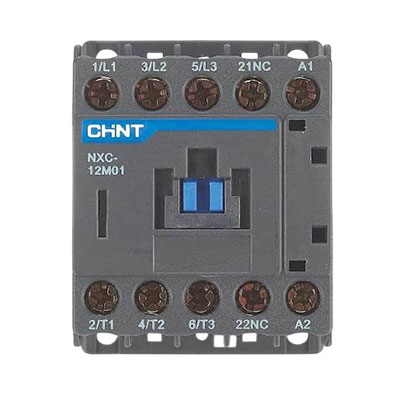
Electrical systems with motors, heating equipment and other controlled loads often require a dedicated switching device that can handle repeated operation. Chint Contactors are used for electrically controlled switching of power circuits and are commonly incorporated into motor control panels, industrial automation systems and commercial electrical installations. A V ENTERPRISEsupplies Chint contactors to customers across Kolkata, Bihar, Odisha, Jharkhand, Chhattisgarh and Assam, catering to industrial users, panel builders, electrical contractors and businesses.The suitable contactor can be selected according to the load type, operational duty, coil voltage, number of poles and other electrical requirements.
Inside a Chint Contactor
A contactor works by using an electromagnetic mechanism to open or close its main contacts when the control circuit is energized or de-energized. This allows a relatively small control signal to operate a higher-power load circuit within the permitted specifications.
Depending on the particular Chint model, features may include:
- Electromagnetic switching mechanism
- Main contacts for power circuits
- Auxiliary contact arrangements
- Different coil-voltage options
- Multiple current ratings
- Compact control-panel construction
- Suitable options for motor switching
- Repeated switching capability according to the product’s duty rating
Choosing a Contactor for the Right Load
Selecting a contactor requires more than checking the current value printed on the device. The application category, motor characteristics, utilization duty, system voltage and control voltage should also be considered.
Selection Parameter | Chint Contactor Details |
Brand | Chint |
Device Category | Contactor |
Switching Function | Electromagnetic Load Switching |
Main Contact Configuration | Model-dependent |
Coil Voltage | According to selected model |
Rated Current | Product-specific |
Number of Poles | Depends on configuration |
Auxiliary Contacts | Available according to model |
Application | Motors, Loads & Control Systems |
Installation | Control Panels / Electrical Assemblies |
The exact current rating, coil voltage, auxiliary contacts, utilization category and other parameters vary by Chint contactor model.
Where Chint Contactors Make a Difference
Contactors are widely used where electrical equipment needs controlled switching, particularly when frequent operation is involved. Chint contactors may be incorporated into:
- Motor starter panels
- Industrial control panels
- Pump control systems
- Compressor installations
- HVAC equipment
- Conveyor systems
- Manufacturing machinery
- Lighting control arrangements
- Process equipment
- Building automation systems
- Commercial electrical panels
- Industrial maintenance systems
Useful for Motor Control Applications
One of the common uses of a contactor is controlling electric motors. In combination with suitable overload protection and other control components, a contactor can form part of a motor starter or motor-control arrangement.
For industrial applications, the contactor should be matched to the motor’s operating characteristics and the intended switching duty. Proper coordination with overload relays, circuit protection and the control system is important for dependable operation.
Why A V ENTERPRISE for Chint Contactors?
A V ENTERPRISE provides sourcing support for customers looking for a Chint Contactor Supplier in Kolkata, Bihar, Odisha, Jharkhand, Chhattisgarh and Assam.
We serve a wide range of buyers, including:
- Industrial companies
- Electrical contractors
- Panel manufacturers
- Automation professionals
- Machine builders
- Maintenance departments
- Commercial establishments
- Project procurement teams
Our focus is on understanding the required specifications before discussing the appropriate Chint contactor for the application.
Procurement Made Easier for Electrical Projects
Electrical projects may require contactors in different ratings, coil voltages and configurations. Managing these requirements becomes easier when the supplier understands the technical details of the order.
A V ENTERPRISE supports customers with product enquiries based on:
- Required contactor rating
- Coil voltage
- Number of poles
- Motor or load application
- Required quantity
- Project or replacement requirement
This makes our service suitable for both regular purchases and larger procurement requirements.
Serving Industrial and Commercial Markets
From manufacturing facilities in Jharkhand and Odisha to commercial projects in Kolkata, and electrical requirements across Bihar, Chhattisgarh and Assam, A V ENTERPRISE supports customers seeking Chint contactor products.
We handle enquiries for individual requirements, machine-building projects, panel assembly and bulk procurement.
Common Questions AboutChint Contactors
What is a Chint contactor used for?
A contactor is primarily used for electrically controlled switching of power loads, especially motors and equipment that require regular switching.
Can contactors be used for motor starters?
Yes. Contactors are commonly used as part of motor starter circuits, usually together with suitable overload and circuit protection components.
How is a contactor selected?
The selection depends on factors such as load type, rated current, motor power, utilization category, control-coil voltage and operating conditions.
Does A V ENTERPRISE supply contactors for industrial panels?
Yes. Industrial users, panel builders and contractors can enquire about Chint contactors for control-panel and project applications.
Which locations are covered by A V ENTERPRISE?
Our service coverage includes Kolkata, Bihar, Odisha, Jharkhand, Chhattisgarh and Assam.
Get Chint Contactor Supply from A V ENTERPRISE
For Chint Contactor Supplier requirements in Kolkata, Bihar, Odisha, Jharkhand, Chhattisgarh and Assam, contact A V ENTERPRISE.Provide your contactor rating, coil voltage, application and required quantity to enquire about the appropriate product, availability and competitive pricing.